
Prep Room Safety & Compliance
Most prep room risks come from inconsistent methods, exposure hazards, poor documentation, and reliance on improvised processes rather than structured, repeatable workflows.
OSHA-Aligned Prep Room Practices
Funeral homes operate under OSHA standards covering bloodborne pathogens, hazard communication, formaldehyde exposure, PPE usage, and employee training.
- PPE usage and exposure protection
- Non-porous, cleanable work surfaces
- Ventilation and air control
- Written exposure control procedures
Positioning & Workflow Consistency
Consistent positioning methods reduce variability in prep room workflows and support safer, more controlled preparation practices.
- Eliminates unstable supports and improvised positioning methods
- Provides consistent elevation for repeatable workflow
- Supports cleanable, non-porous surface standards
- Reduces physical strain during lifting and dressing
Inspection Readiness
Compliance is not just about having equipment in the room. It also requires documentation, training records, monitoring, and emergency readiness.
- Formaldehyde exposure monitoring
- Training documentation
- Emergency eyewash systems
- SDS accessibility
Guides & Training Materials
Structured guidance helps reduce variability across staff, support safer workflows, and reinforce consistent prep room practices.

How to Standardize Prep Room Workflow
Standardized workflow reduces variability, improves preparation consistency, and limits reliance on improvisation.
- Defined positioning and dressing sequence
- Consistent routines across staff
- Clearer process expectations
Resource: Certified Safety Training

Reducing Physical Strain During Dressing
Repetitive lifting and awkward body positioning create avoidable ergonomic risk in prep room environments.
- Reduce repetitive lifting
- Improve leverage and access
- Use controlled elevation methods

OSHA Training Requirements for Funeral Homes
Employees with occupational exposure should receive training at initial assignment and at least annually thereafter.
- Initial assignment training
- Annual refresher training
- Bloodborne pathogens education
- Hazard communication awareness
Posters & Compliance Materials
Visual materials help reinforce expectations, reduce missed steps, and support everyday awareness in prep room environments.
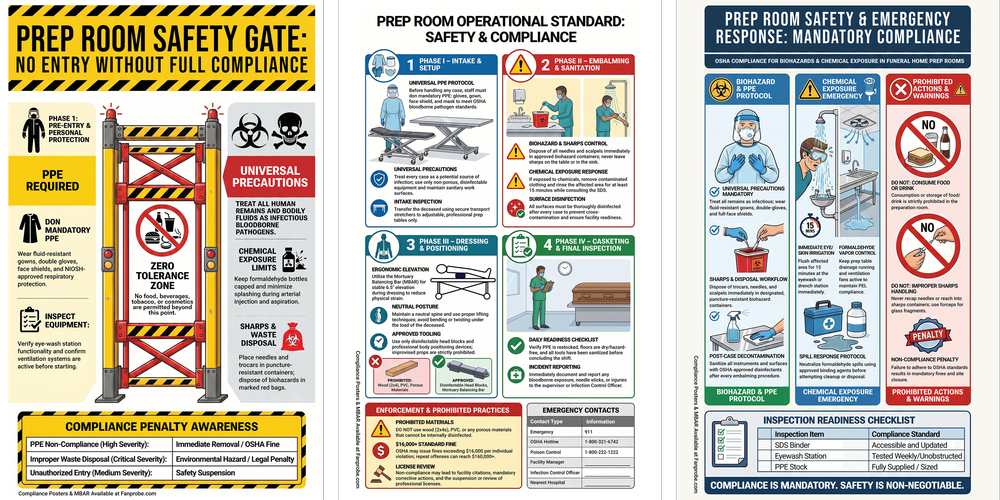
Prep Room Safety Posters
Reinforce PPE use, sanitation practices, workflow awareness, and room-readiness expectations.
- 11" x 17" format
- Professional visual layout
- Designed for real prep room reference

Checklist Sheets
Checklists support repeatable readiness, PPE verification, and routine operational review.
- Daily readiness checks
- PPE verification
- Cleaning and room review

Emergency Reference Materials
Quick-reference materials can help reduce confusion during spill response, exposure events, or emergency situations.
- Spill response guidance
- Exposure protocol reminders
- Emergency contact access
Product Education
Learn more about prep room support tools, material selection, and the role of standardized equipment in workflow consistency.
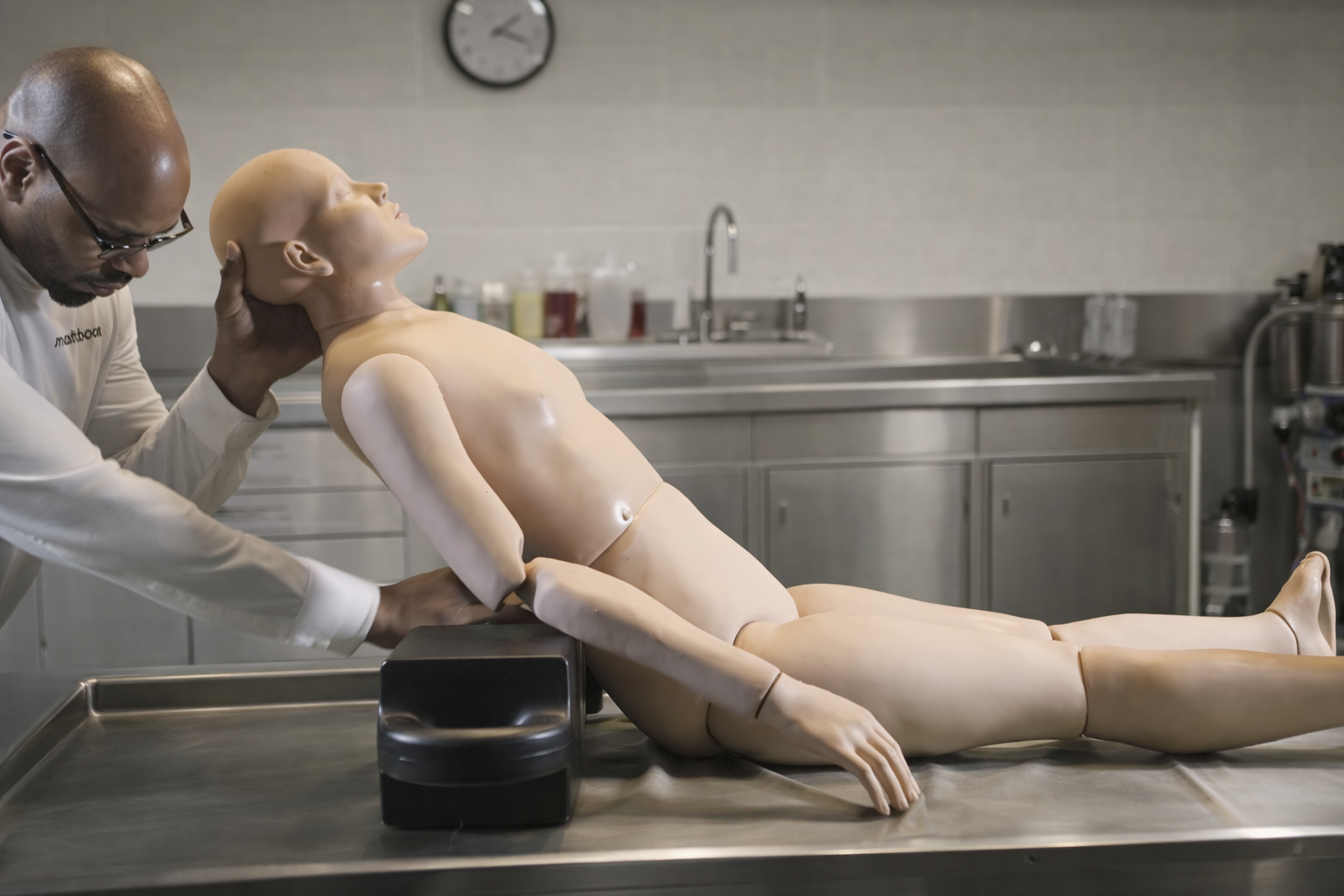
What Is the MBAR?
Understand the purpose, design intent, and prep room application of the Mortuary Balancing Bar.
Learn More
How the MBAR Works
Review how elevated positioning can support access, preparation consistency, and reduced reliance on improvised methods.
Learn More
Why Material Choice Matters
Cleanability, durability, and consistent construction matter in professional prep environments.
Watch Video Resource: Rapid DirectFrequently Asked Questions
Answers to common questions around workflow, materials, safety thinking, and prep room standardization.
Why should prep room workflow be standardized?
Standardization improves consistency, reduces avoidable strain, supports cleaner process flow, and limits reliance on improvised methods.
Why do cleanable materials matter in a prep room?
Materials in prep environments should support routine cleaning and resist retaining contamination or degrading over time.
Are improvised tools a long-term solution?
Improvised tools can create inconsistency in support, cleaning, workflow, and staff handling. Standardized tools are typically more reliable for repeatable operations.
How does this resource hub support purchasing decisions?
It helps funeral professionals evaluate safer, more structured prep room approaches and understand the operational context behind better tools and workflows.